Category: Sydney Helmuth

  • Lauren Eckstein on Turning Political Passion into Action

    Lauren Eckstein on Turning Political Passion into Action

    Getting involved in politics at such a young age can be daunting. You may not be sure where to start or what you can accomplish. Luckily, I got to sit down with Lauren Eckstein, a Political Science Student at Washington University in St. Louis, to learn how she became passionate about political advocacy as a teen.

    Finding a Passion for Politics

    Eckstein was says she was “fortunate” to grow up in a politically engaged household. “My parents introduced me to politics at a young age, with my first political memory being filling out the bubble on my dad’s ballot for Barack Obama in 2008. I did not pay much attention to politics during the Obama years but during the 2016 election is when I truly started to care. This is both due to my past interest in history, as well as recognizing the importance of this election,” she said.

    Turning Interest Into Action

    Eckstein’s transition from passive interest to active engagement happened in 2016. “I truly cared about the politics around me. At the time, everything that was happening was so unprecedented.”

    Using Social Media as a Tool for Change

    For today’s youth, social media can be a powerful tool for activism. Platforms like TikTok allow messages to spread quickly, making them effective for mobilizing people and raising awareness.

    “Social media, especially apps that share content with a large group of people, like TikTok, are a great tool to create real action. I, along with a small group of other Arizona high school students, ran a TikTok account in support of at the time candidate, now Senator, Mark Kelly. By creating content that identifies with people of a similar age group, we were able to turn social media into real action,” Eckstein shared.

    Staying Engaged Without Burnout

    Political work can be overwhelming, making self-care essential. Taking time for yourself is incredibly important! For me it was a bit different during my first campaign as it was during Covid, but now I realize that I need to both work incredibly hard and take time for myself. Communication is key in most issues, and is certainly key here,” she said.

    Advice for Young Changemakers

    Eckstein encourages young people to never underestimate their ability to make a difference. “Don’t think you’re too young to make a difference! Even though you cannot run for office yet, there are so many ways you can become involved. By creating a club at your school, reaching out to a campaign, or educating others you are truly making a difference,” she shared.

    A Success Story: Turning Advocacy Into Impact

    Eckstein has helped start key initiatives that brought together young activists and gave them opportunities to engage in meaningful political work. “In 2020 when Covid started, I helped create the Future Leaders program for the Mark Kelly campaign. With many of these leaders, we later created the Arizona High School Democrats and were able to mobilize students across the entire state, creating social media content and working on campaigns.”

    Final Thoughts

    Eckstein’s story is a testament to the impact young people can have when they take action. Whether through social media, organizing, or direct involvement in campaigns, their voices are powerful. She encourages all young individuals to step up, get involved, and become part of the movement shaping the future.
  • Powerful Visuals Can Create Powerful Change: The Impact of Infographics

    Powerful Visuals Can Create Powerful Change: The Impact of Infographics

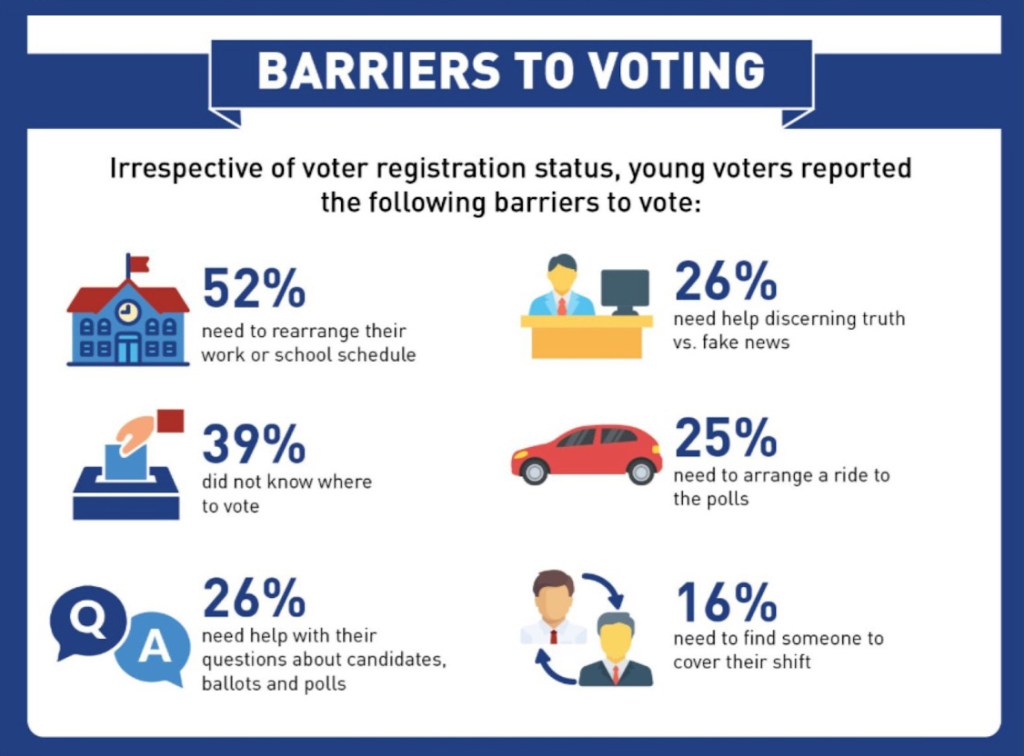
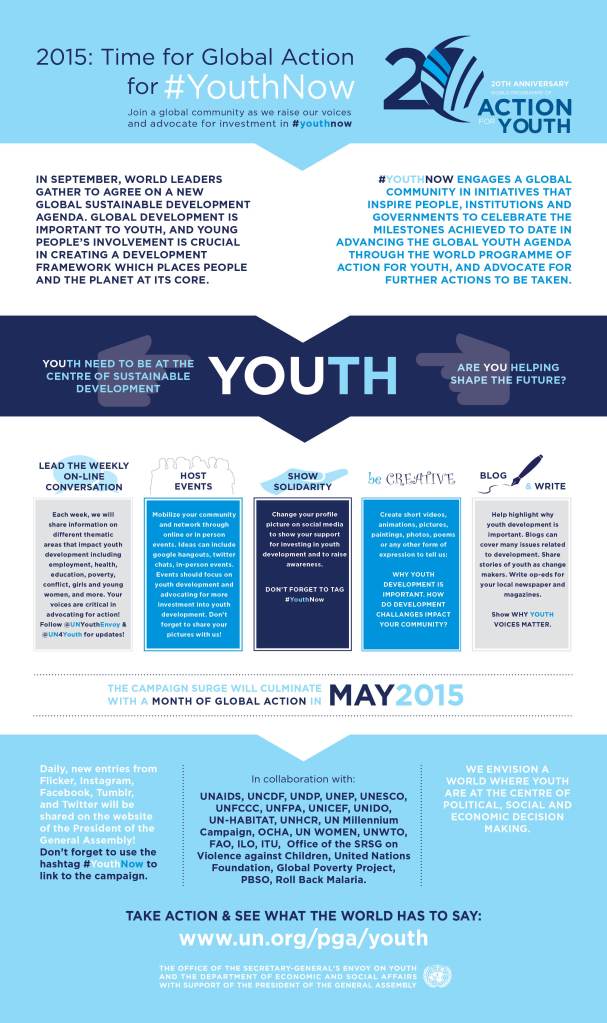
    In today’s digital age, infographics can be powerful tools for educating and mobilizing young people in political advocacy. Visual storytelling can simplify complex issues, highlight key statistics, and inspire action in ways that plain text often cannot. However, infographics can have varying levels of effectiveness based on how the data is presented. In this post, I’ll analyze two infographics focused on youth political engagement. One addresses barriers to voting, and another promotes global youth activism. By examining their design, readability, and messaging, we can explore how well they communicate their message and motivate young people to get involved in shaping their communities and the world.

    Infographic #1: CIRCLE’s Barriers to Voting

    This infographic is super effective visually. It is well-structured and has a clear title at the top that immediately informs the audience of its focus. The layout follows a logical order, with each barrier paired with a percentage and an icon, making it easy to digest. Larger percentages and bold text help emphasize key data points, ensuring that the most important information stands out.

    The infographic effectively balances text and visuals, using icons to reinforce each statistic without overwhelming the design. The icons use colors strategically (e.g., a red car for transportation, and a blue school for scheduling issues), making them visually distinct and easier to associate with the data. There’s a good amount of white space, preventing the infographic from feeling cluttered.

    It is clear that the infographic’s goal is to inform. However, a more effective infographic might include a call to action. Suggesting solutions could make the message more action-oriented. Adding a small section at the bottom with steps to overcome these barriers could enhance the impact.

    Infographic #2: United Nation’s YouthNow Campaign

    The title of this infographic is immediately effective. The use of the hashtag reinforces the campaign’s social media focus. The sections are clearly separated, making it easy to navigate different ways youth can get involved. Additionally, the graphic contains a call to action at the bottom (Take Action & See What the World Has to Say); this is positioned well, encouraging participation.

    The infographic aims to do a lot: explain why youth engagement is important and break down methods of doing so. Because of this, it is packed with lots of information. It provides multiple ways to take action and different methods of engagement to make participation accessible.

    However, the infographic is simply too packed with text. There are too many large blocks of text featured, making it hard to digest. Breaking these down into bullet points and including more images, illustrations, or statistics could make the graphic more engaging and digestible, especially to be shared on social media.

    How can we learn from these graphics?

    Analyzing these infographics provides valuable insights into what makes visual storytelling effective in youth political advocacy. From clear organization and engaging visuals to concise messaging and compelling data, each element plays a crucial role in capturing attention and inspiring action. By understanding these design principles, you can create an impactful infographic that educates and motivates young people to participate in politics. I have been tasked with creating an infographic in one of my classes. Using my analysis of these graphics, I can create a more visually appealing and engaging graphic. I hope you remember this analysis the next time you’re tasked with visual storytelling!

  • Why Voting Matters & How to Register as a First-Time Voter

    Why Voting Matters & How to Register as a First-Time Voter

    Voting is one of the most powerful tools in a democracy. It allows citizens to have a direct say in who is representing them and how their communities are governed. Every election shaps policies that affect your everyday life. Education, healthcare, climate change, and civil rights legislation are all influenced by voters. By casting your vote, you contribute to decisions that impact your future and the world around you.

    If you have never voted before, participating in an election is an important milestone. Many people assume that their single vote will not make a difference, but history has proven otherwise. Numerous elections have been decided by just a few votes. When more young people, first-time voters, and underrepresented communities participate, democracy becomes more inclusive and representative of all voices. Though 2025 does not hold any big national elections, special elections often happen in off-cycle years. It is crucial to be registered to vote and follow along with local news to learn about important election information.

    How to Register to Vote

    Registering to vote is the first step in making your voice heard in elections. Here is how you can get started:

    1. Check your eligibility: In the U.S., you must be at least 18 years old by Election Day (some states allow 17-year-olds to vote in primaries if they turn 18 before the general election). You must also be a U.S. citizen and meet your state’s residency requirements.
    2. Find your state’s registration rules: Each state has its own deadlines and registration methods. You can visit nass.org/can-I-vote to check your state’s specific requirements.
    3. Choose your registration method: Most states allow registration online, by mail, or in person at designated locations such as the DMV, county clerk’s office, or public libraries. Some states also offer same-day registration at polling places.
    4. Provide necessary information: To complete your registration, you may need a driver’s license, state ID, or the last four digits of your Social Security number. Some states require proof of residency, so check your local guidelines.
    5. Confirm your registration: After submitting your application, verify your status through your state’s election office website to ensure there are no issues.

    Once you are registered, learn about the candidates, policies, and local issues on your ballot. Mark your calendar for Election Day, or check if your state offers early voting or mail-in/absentee ballot options. To extend your reach, encourage your friends and family to register and vote, too. Our democracy is at its strongest when we all participate.

  • Understanding How Laws Are Made

    Understanding How Laws Are Made

    Understanding the legislative process can be essential for young activists to make effective changes. If you have knowledge of the legislative process, you can help influence policy decisions and advocate effectively for whatever you are passionate about. Want to know more about how ideas are transformed into laws and how you can engage in this process? Read more below.

    From Idea to Law: A step-by-step breakdown

    1. Idea Formation: Every law starts as just an idea. This can come from anyone (lawmakers, advocacy groups, and even citizens).
    2. Bill Drafting: When an idea gains popularity, a member of Congress can sponsor it by drafting it into a bill. 
    3. Introduction and Committee Review: After the bull is drafted, it is introduced in either the House of Representatives or the Senate. Then, it is assigned to a committee for a detailed examination. During Committee Review, the bill is analyzed by experts on the subject. The committee will hold hearings regarding the bill and may propose amendments to the bill.
    4. Debate and Voting: If the committee approves the bill, it will move to the chamber floor for debate. Congress members can discuss its merits and pitfalls before voting. If the bill is passed in the chamber it is introduced, it is sent to the other chamber for a similar review process. 
    5. Reconciliation: The second chamber has the power to make changes to the bill. If the originating chamber disagrees with those changes, both chambers must agree on the final bill.
    6. Presidential Action: When the bill is passed by both chambers, it is sent to the president. The president can sign the bill into law or veto it. If the president decides to veto the law, Congress can override that with a two-thirds majority. 
    7. Implementation: When a bill becomes law, government agencies relevant to the bill must implement and enforce the law. 

    For a quick and catchy explanation of how a bill becomes law, watch my favorite Schoolhouse Rock video here!

    How Can You Influence the Lawmaking Process?

    There are several ways that young people can impact the legislative process. One of the best things you can do is raise awareness about topics that matter to you. Educating your peers and community through social media or open discussions can help inform others who may want to support your mission and advocate for change.

    Another thing you can do is to contact your lawmakers. Writing emails, making phone calls, and meeting with your representatives can help you directly express your views to the people in charge. Sharing personal stories or well researched arguments can help to influence your lawmaker’s position on the issues that you care about. If you can attend legislative hearings and offer testimony, these insights can go even further to help shape policy decisions.

    Find your elected officials here.

    Having knowledge of the legislative process can help you to navigate and influence these complicated government systems. Figure out what matters to you, and your efforts can help change the world!

  • Young Activists Change the World: Are you next?

    Young Activists Change the World: Are you next?

    Young people have played a critical role in shaping the world all throughout history. From civil rights to climate change, young activists have been changemakers, proving that age is no barrier to making a difference. But that does not mean it is easy. So how do young activists do it, and how can you follow in their footsteps?

    Malala Yousafzai: Fighting for Education

    Malala Yousafzai began speaking out against the Taliban’s ban on girls’ education in Pakistan at only 11 years old. She began anonymously writing a blog for the BBC, where she discussed the plight of girls who were denied their right to education. However, in 2012, she was shot in the head by the Taliban on her way to school. Luckily, she survived and became an international advocate for girls’ education. She won the Nobel Peace Prize at 17, which made her the youngest recipient ever. Currently, she continues to fight for equal educational opportunities for girls. She has published several books about her experiences and founded the Malala Fund. The Malala Fund has directly impacted over 90,000 girls and indirectly impacted over 10 million by helping with school enrollment, informal education programs, and advocacy work.

    X González: Standing Up for Gun Control

    In 2018, X González survived a school shooting at her high school in Parkland, Florida. After the attack, González became one of the most prominent voices in the fight against gun violence. Just days after the shooting, González became a national figure because of a powerful speech calling out U.S. politicians for continuously failing to enact meaningful gun control policies. González co-founded the March for Our Lives movement, which continues to push for gun control, and organized one of the largest youth-led protests in American history. González quickly became a powerful young activist, standing against gun violence.

    I wrote more about the March for Our Lives movement in one of my recent blog posts. Read all about it here.

    How You Can Make a Difference:

    Both of these powerful young activists demonstrate that anyone can make meaningful change in the world regardless of age. Want to make your own change? Here are some ideas of how you can get started:

    • Find your passion: What issues matter the most to you? Climate change, voting rights, gender equality?
    • Start small: Join local organizations or spread awareness through conversation with your peers.
    • Use social media: Share reliable information and connect with other activists.
    • Take action: Volunteer, organize events, write to elected officials. Small efforts can contribute to big movements.
    • Stay Persistent: Change takes time. Even if progress feels slow, keep pushing forward.

    Whether it’s standing up for LGBTQ rights, fighting for the environment, or pushing for abortion rights, the world needs your voice now more than ever. You could be the next iconic activist. If you’re ready to take action, let me know how you plan to make a difference in the comments!

  • Turning Online Activism into Real Change

    Turning Online Activism into Real Change

    One of the most impactful changes to activism in the past few decades have been the prevalence of social media. According to a study conducted by the Pew Research Center, 73% of participants believe that access to social media and the internet has made them more informed about current events in their country and in others. Social media is a great tool that can be used for advocacy, but change most often happens beyond the screen. 

    Social media is a great tool to quickly mobilize people, amplify voices, and spread awareness. It is especially useful for young people. One of the best examples of this is the March for Our Lives movement. Started by students in the wake of the 2018 Parkland shooting at Marjory Stoneman Douglas High School, the movement perfectly encapsulates how online activism can spark a national conversation. But lasting change requires steps beyond the online space.

     March for Our Lives began to demand safer schools with strong gun laws. Using social media, the movement has grown out of Parkland and to thousands of students nationwide. But the impact has been felt far outside Instagram. March for Our Lives gained traction through viral videos, hashtags, and social campaigns. Now, they work in courts, on legislation, and through on-the-ground grassroots organizing to make real change. The group helped break youth voter turnout records in 2018, created a White House Office of Gun Violence Prevention under the Biden administration, and passed several gun reform laws in various states. Social media can help spread awareness and build solidarity, but it is only a starting point for tangible change.

    When seeking information online, it is crucial to be well-informed. The internet can be a cesspool of misinformation, and, if you are not careful, it can be easy to fall into a trap. Following credible sources, like NPR or AP News, can be helpful in making sure the information you consume online is accurate. Be cautious about misinformation—especially on social media. Fact-check what you read, and only share verified information. Staying informed strengthens your ability to advocate effectively.

    Real change happens with action. Here are a few ways you can make a difference in your community, beyond your screen.

    • Vote. It is the most powerful way to influence policy. 
    • Join local organizations. Get involved with groups that are working on what you are passionate about.
    • Contact your elected officials. Write, call, or meet with your representatives to make your voice heard. 
    • Volunteer. Help with events that align with your interests.

    Young people have the power to create real change. The March for Our Lives movement is a great example of how social media can help build a movement, but action is required beyond the internet. You can make an impact online and in person. 

  • Young People Can Be Seen and Be Heard with The Body Shop

    Young People Can Be Seen and Be Heard with The Body Shop

    Popular skincare brand The Body Shop is helping young people get involved with advocacy initiatives that matter to them. Founded in 1976, The Body Shop started because it believed that business could be a force for good. The company committed to its mission of selling ethically sourced, cruelty-free beauty products and has been a force for positive change in the cosmetic world ever since. One of the company’s major efforts outside of its products is the “Be Seen Be Heard” campaign. The campaign was a massive move for the business’s corporate social responsibility (CSR) initiatives. 

    The Be Seen Be Heard campaign is a partnership between The Body Shop and the United Nations Human Rights Office. Together, they aim to advocate for “a future that recognizes young people’s political participation as a driving force for positive change.” Since its launch in 2022, both organizations have been dedicated to ensuring that young voices are heard and valued in the political process. 

    As part of the campaign, the Be Seen Be Heard report was released. The report includes findings from The Body Shop’s largest-ever survey, which was carried out in December 2021. The survey covered 26 countries and had 27,043 respondents, over half of whom were under age 30. The report highlights both formal and informal engagement in political participation as beneficial for a resilient democracy, emphasizing ways to encourage both. At its core, Be See Be Heard and the collaborative report released with the United Nations is a call to action for governments, institutions, and communities to listen to the next generation.

    The Body Shop’s campaign is critical right now. With the effects of the COVID-19 pandemic, mental health crises, and worsening climate change, young people are facing a tumultuous world. Many are passionate about these issues and further political advocacy, but they remain largely excluded from the political decision-making process. Be Seen Be Heard is dedicated to bridging this gap and ensuring that young people have the ability to make the change they seek. 

    The Body Shop has become more than a cosmetic marketplace. The business has turned its storefronts into more than retail spaces through its CSR efforts. They have become large hubs for encouraging activism and political participation. The company has hosted a variety of events, from hosting youth consultations to making advocacy toolkits. Additionally, The Body Shop has partnered with grassroots organizations, the United Nations, and policymakers to assist with their initiatives. One of their biggest goals is to lower the UK voting age to 16. They have partnered with the British Youth Council to campaign for this goal, arguing that young people are integral to the political system and are affected by many of the decisions being made in the government.

    To be part of the change, you can visit TheBodyShop.com. There you can find more information regarding their cruelty-free mission and products, and their dedication to political advocacy for young people. Be Seen Be Heard is a great example of a CSR initiative striving to help young people make change.

  • How to Stay Politically Informed Without Losing Your Mind

    How to Stay Politically Informed Without Losing Your Mind

    I don’t think it is a secret that it is important to stay politically informed. Politics shapes our world and makes an impact on our everyday lives through economic and social policy. However, it would be naive to say staying informed is easy. The constant news cycle is straight-up overwhelming. We have access to so much information at the touch of our fingertips that it can be hard to pay attention without heaping amounts of stress from continuous coverage, social media, and misinformation. It is so crucial that we are able to stay informed without tons of mental fatigue.

    Before you start consuming news, it is important that you choose credible sources. Many organizations produce news content, and many are responsible for the spread of misinformation. It can be hard to determine which news sources are reliable, especially with the influx of misinformation and bias in the past few years. Ad Fontes Media, a public benefit corporation, created the helpful chart below to help media consumers be more informed about where their information is coming from. It labels the bias of media producers, as well as the reliability of their news. 


    I would recommend taking a look at the chart and determining 2-3 sources that you trust, ideally in the green box, which highlights organizations that are the least biased and the most reliable. Two of my personal favorites are NPR and AP. Though you should not take everything these organizations say as gospel, they tend to be more reliable and less biased than many other news groups.

    Now that you’ve chosen some source that you trust, explore the types of content you want to consume. Many of these organizations produce print news, digital journalism, podcasts, etc. Like many young people, I do not receive a physical newspaper. I rely on digital news, podcasts, and videos for my information.

    Podcasts are definitely a favorite of mine. They provide an easy way to integrate mindful media consumption into your daily routine. Whether walking to class, getting ready in the morning, or driving to work, it is rather easy to find time to turn on a podcast. I would recommend NPR’s Up First podcast. Every morning, they provide coverage of three of the biggest news stories of the day. Usually, the episodes are under 15 minutes, making the content super digestible and a quick and easy way to stay informed.

    Though it is always important to stay informed, setting boundaries is just as crucial. According to the American Psychological Association, psychologists are seeing an increase in news-related stress. So don’t be afraid to set some personal parameters. Some boundaries you could set include:

    • Setting specific times to check the news
    • Turning off on-essential news notifications
    • Taking breaks from political news consumption
    • Avoiding news topics that may be overly personal or stressful
    • Being cognizant of your social media usage

    Though none of these boundaries are going to magically make politics less stressful, they can reduce the stress you may carry while following the news. It is important to be a critical consumer of news and stay informed about politics, but don’t forget to give yourself some grace.

  • Nonprofit Empowers Young Activists Through Financial and Organizational Support

    Nonprofit Empowers Young Activists Through Financial and Organizational Support

    There are many barriers that prevent young people from getting involved in issues that they care about. One prominent barrier many face is finances. Leading advocacy initiatives is daunting, especially without financial support. To help relieve this burden, the nonprofit organization Future Coalition provides fiscal sponsorships to help meet the specific demands of youth and grassroots organizers. 

    Established in 2018, the organization has rapidly become a hub for youth-led activism, amplifying the stories of young individuals addressing the needs of their communities. At its core, the group believes in the power of young people to drive change. Future Coalition describes its mission as “accelerat[ing] the impact of young leaders by incubating, connecting, funding, and amplifying their work.” 

    In 2024, through its Future Incubator service, Future Coalition supported 15 youth-led or youth-centered projects. Future Incubator does not only provide monetary support for its projects; it also supports the administrative and legal backend for these youth-led initiatives.

    One of these projects is the Arizona Youth Climate Coalition. Due to Future Coalition’s fiscal support, the Arizona Youth Climate Coalition has been allocated more resources to its fight for climate justice, while the Future Incubator service covers management and fundraising softwares and legal and financial support. Without these services, it can be hard for youth-led initiatives to grow. Future Coalition allows youth advocates to focus on their mission, while assisting with more mundane financial, legal, and administrative tasks.

    In addition to Future Incubator, Future Coalition leads several other key initiatives to help young people get involved in politics. The coalition has had a crucial role in mobilizing young voters. Future Coalition’s Voter Hub serves as a platform for young voters to learn about politics, get engaged, and mobilize their communities. Recognizing the historic opportunity presented by recent elections, Future Coalition has encouraged young people across the country to push for a more progressive path, providing resources to ensure they are ready to vote. This includes tools to check registration, register to vote, and vote early.

    Future Coalition emphasizes the power of youth-led activism, supporting youth leaders and advocates in a variety of different ways. The resources and initiatives it provides are fundamental for the support of young advocates, and more organizations should be following in its footsteps. The Future Incubator program is a prime example of how Future Coalition is supporting young leaders. The Coalition’s other initiatives, such as the Voter Hub, work to mobilize young people to get involved in elections and issues that they care about. Future Coalition’s work allows young leaders and youth-led initiatives to thrive.

  • Exploring the Power of Political Advocacy for Young Voices

    Exploring the Power of Political Advocacy for Young Voices

    From a young age, I found myself fascinated by the world of politics. Every day, there are powerful people making decisions that will impact all of our lives. I remember my elementary school holding a mock election in 2012. I, of course, took this extremely seriously, researching both Barack Obama and Mitt Romney’s campaigns to make an informed decision. In 2020, when I was a little bit older, I got involved in the election in a more impactful capacity. I volunteered for Mission4AZ, creating social media content with peers to help get Mark Kelly elected as a United States Senator for Arizona. Working in this capacity opened my eyes to the power of young voices in political advocacy, and I want to share that power with others.  

    Historically, there have not been many political spaces open to youth and young adults, and I think it is time that changed. Luckily, with the prominence of social media, there is a much larger conversation happening about politics among younger generations. In this blog, I want to explore how young people can get involved with issues that matter to them. Social media is an easy and great way to do this, but there are so many other avenues as well. This blog will look into several ways young people can get involved in political advocacy, and why it is so important to do so. 

    Given the recent election, it is fair to say that American politics has been tumultuous as of late. It can be overwhelming and intimidating to consider. Preliminary data estimates that less than half of eligible young voters, ages 18-29, cast ballots in the 2024 election. This indicates a lower voter turnout from 2020. This decline is concerning, especially considering recent research says 55% of young people (ages 18-29) say the country is going in the wrong direction, and only 16% believe it’s on the right track. 

    These numbers emphasize the necessity of getting young adults involved in political spaces. With so few believing that the country in on the right track, I want to make sure other young people have the resources to change this. If you are interested in politics or want to be more involved, I encourage you to follow along. It is my goal to make sure that young people recognize the power they have, and never feel like they do not have a voice to advocate for themselves.